
In today’s barbering industry, continuous advancements in technology and tools are making haircuts increasingly efficient and sophisticated. Whether performing simple trims or complex styling, advanced hair clippers (electric hair clippers) have become an indispensable tool in a barber’s daily routine. For professional barbers, choosing the right hair clipper not only improves efficiency but also ensures they provide customers with higher-quality haircuts.
Unlike standard household electric hair clippers, professional hair clippers feature more sophisticated designs and more powerful performance. They can handle frequent use and help barbers create a variety of complex hairstyles. Therefore, understanding the functions and features of high-end hair clippers and how to choose the right tool is crucial for every barber.
This article will delve into the advanced hair clippers commonly found in barbershops and analyze their functions, design features, and how they affect the quality and effectiveness of the haircutting process.
1. Advanced Hair Clippers: Differences from Ordinary Electric Hair Clippers
While regular electric hair clippers and professional-grade hair clippers may look similar, there are significant differences between them in terms of design, functionality, and user experience. The quality, performance, and range of tasks a hair clipper can perform all depend on the technology and materials used.
1.1 Powertrain
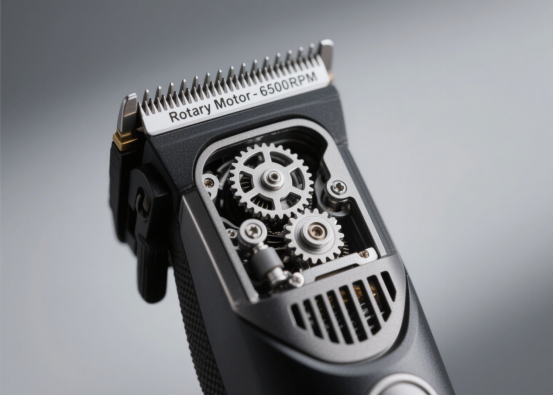
Premium hair clippers typically feature power systems that far surpass those of standard models. Professional-grade clippers are equipped with high-efficiency electric motors, and many high-end models utilize rotary motors. Their powerful and stable performance allows for continuous operation under heavy loads, making them suitable for long, frequent work sessions. These motors deliver smooth and consistent performance across diverse hair textures and complex hairstyles, ensuring a precise cut every time.
In contrast, conventional hair clippers typically use vibration motors. While sufficient for simple home use, they lack stability and durability under prolonged use and high-frequency operation. The low power of vibration motors can also easily produce uneven cutting effects during the cutting process, affecting the final hairstyle.
1.2 Cutting head design
The blade design and material have a profound impact on a hair clipper’s performance. Premium hair clippers often use ceramic or titanium blades, which offer superior wear resistance, sharpness, and heat resistance. Ceramic blades are sharper than traditional stainless steel blades, and their excellent heat conductivity effectively prevents hair pulling caused by high temperatures, resulting in a smoother cut. Titanium blades are not only extremely durable but also rust-resistant, maintaining their sharpness and stability even during intense use.
On the other hand, the blades of ordinary hair clippers are generally made of stainless steel. Although they are sufficient for daily use, they may not be as sharp and durable as the blades of high-end hair clippers. Especially after long-term and high-frequency use, they are prone to wear and dullness, which affects the hair cutting effect.
1.3 Noise and Vibration
Noise and vibration are significant factors that impact the haircutting experience. Premium hair clippers are typically designed with superior noise and vibration control, allowing barbers to perform delicate procedures in a relatively quiet environment, ensuring a more comfortable haircut for their customers. In contrast, ordinary electric hair clippers, due to their weaker power systems, can generate significant noise and vibration during operation, impacting not only the customer experience but also the barber’s precision.
The low-noise design of the professional hair clipper allows barbers to focus on detailed cutting, while also providing customers with a quieter and more enjoyable haircut experience. It is especially suitable for high-end barbershops or occasions requiring detailed styling.
1.4 Durability and Adaptability
Premium hair clippers are designed for durability and adaptability. Because they often withstand heavy use, manufacturers carefully consider the materials and manufacturing processes. For example, many professional hair clippers feature a sturdier casing that can withstand the roughness and wear of daily use, ensuring long-term stability.
Furthermore, professional hair clippers are able to adapt to a variety of hair textures and styles. Many advanced models feature multiple speed settings and adjustment functions, providing more flexible adjustment options for different hair textures. In contrast, standard electric hair clippers often lack these adjustment features, which may not be able to adapt to certain hair types and textures.
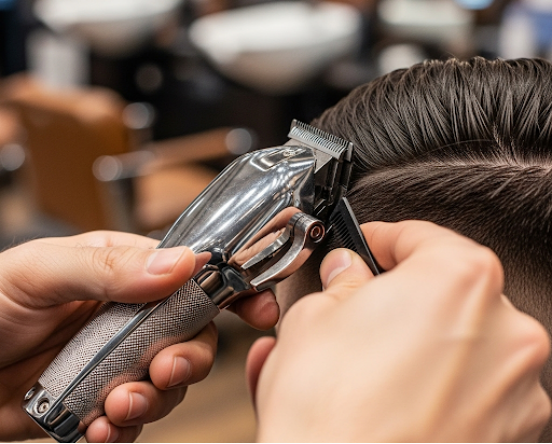
2. Core Functions and Features of Advanced Hair Clippers
In addition to the basic performance mentioned above, advanced Hair Clippers also have a series of professional functions, which make the haircutting process more efficient and precise, and can meet the needs of different customers.
2.1 Various adjustment functions
High-end hair clippers often have adjustable heads or knobs, which allow hairdressers to precisely adjust the haircut to the customer’s hairstyle. Common adjustment options include:
Cutting Length Adjustment: The adjustment knob of the hair clipper can help the barber easily select different cutting lengths, which is especially important when trimming short hair or gradient hair styles. Whether it is trimming the length of the hair or trimming fine details, it can be done accurately.
Cutting head angle adjustment: Some high-end hair clippers support cutting head angle adjustment, which helps barbers to be more flexible in trimming details, especially when designing complex hairstyles, and can handle hair lines and hair ends more accurately.
2.2 Efficient Charging and Battery Technology
For professional hair clippers, battery life and charging speed are crucial. Many premium hair clippers are equipped with high-performance lithium-ion batteries, which not only provide extended use but also support fast charging, eliminating the need for frequent stops. Wireless functionality, in particular, allows hairdressers greater flexibility and freedom from cable constraints.
Long-lasting batteries: Some high-end hair clippers can work continuously for 90 to 120 minutes on a charge, which is enough for a hairdresser to complete a full day’s work.
2.3 High-quality blade material
The blade material and sharpness directly impact a clipper’s performance. Ceramic blades offer greater sharpness and wear resistance than steel blades, providing a smoother cutting experience and reducing hair pulling. Titanium blades, on the other hand, are more durable and maintain a good cutting effect even under intense use.
2.4 Ergonomic Design
Prolonged use of a hair clipper can cause hand fatigue, so premium hair clippers are often designed with ergonomics in mind, ensuring a comfortable grip during extended work. Many hair clippers feature grips made of non-slip material, which not only provides comfort but also increases stability, preventing slippage and other potential haircutting errors.
2.5 Efficient cleaning and maintenance functions
Premium hair clippers often feature self-cleaning systems or quick-release features, allowing barbers to easily clean or replace the blades, keeping the clippers hygienic. This not only helps extend the life of the blades but also prevents bacterial growth, ensuring a hygienic and safe haircut every time.
2.6 Additional accessories
Many professional-grade hair clippers come with a variety of additional accessories, such as combs of different lengths and detail trimming heads. Barbers can choose the appropriate accessories to meet their specific needs, enhancing the precision and versatility of their haircuts, especially for complex hairstyles.
3. How to choose the right high-end hair clippers for yourself?
Choosing the right hair clippers is a critical decision every barber must make. Different haircutting needs require clippers with different functions, so barbers should consider the following factors when choosing:
3.1 Hairstyle Requirements
If a hairdresser needs to frequently handle complex hairstyles or long hair, it would be more appropriate to choose a hair clipper with high power and adjustable functions. This can ensure that the hair clipper performs stably under various hairstyles and hair qualities, avoiding the effect of equipment limitations.
3.2 Comfort
The feel and weight of a hair clipper are particularly important for barbers who use it for long periods of time. Choosing an ergonomically designed hair clipper can reduce hand fatigue and improve operational precision.
3.3 Blade quality
The blade is one of the core components of a hair clipper. Ceramic and titanium alloy blades are the most common high-end blade materials. They are not only sharp and durable, but also provide a smoother cutting experience and avoid hair pulling.
3.4 Budget
While premium hair clippers come with a higher price tag, their durability and performance improve a barber’s productivity, making them a worthwhile investment in the long run. If you’re on a budget, prioritize a hair clipper with essential features rather than all the bells and whistles.
4. Summary
Premium hair clippers have become essential tools in the modern barbering industry. With powerful power systems, precise adjustment features, high-quality blades, and comfortable ergonomic designs, they help barbers improve efficiency and cut quality. For professional barbers, choosing a high-performance clipper not only enhances service quality but also provides customers with a more comfortable and precise haircut experience.