
In actual haircutting, the value of hair clippers often lies in the details, rather than the length itself.
Especially the sideburn line, a small area that seems simple, almost determines the “professionalism” of the final hairstyle.
Many people encounter the same problem when using hair clippers:
the overall cut is very clean, but from a distance, it always seems to lack a certain sharpness.
This is most likely due to the sideburns—the lines aren’t clear enough, or they’re styled too harshly. This is why “techniques for sculpting sideburn lines with hair clippers” consistently remains a popular search term.
clipperTable of Contents
clipperWhy is the sideburn line considered the touchstone of hair clippers technique?
If you only look at photos of hairstyles, it’s easy to spot a pattern:
the simpler the hairstyle looks, the higher the requirements for the lines.
Sideburns define the structure of a hairstyle, not serve as decoration.
embellishments, but in styling, the sideburns serve as the “boundary.”
They are not mere embellishments, but rather crucial lines that determine the clarity of the hairstyle’s outline.
When the sideburns are clean, the hairstyle will look more layered;
but when the lines are blurred, even if the top and back are trimmed neatly, it will look loose.
This is why many professional hairdressers will deal with the sideburns first, and then go back to adjust the overall style—
because once the sideburns are determined, the “framework” of the entire hairstyle is clear.
The shape of the sideburns directly affects the appearance of the face.
From a visual psychology perspective, people’s gaze naturally lingers at the junction of facial contours.
Sideburns fall precisely at this location.
- Clear lines → Makes the face appear clean and sharp
- Drooping or blurred lines → make the face appear loose.
Therefore, using hair clippers to trim sideburns is actually “trimming the boundaries of the face,” not just trimming the hair.

Preparations must be made before using hair clippers.
Many people believe that if sideburns aren’t trimmed properly, it’s because their hands are unsteady.
However, in reality, insufficient preparation is the most common reason.
Not all hair clippers are suitable for trimming sideburns.
Although hair clippers on the market may look similar, there are significant differences in the level of detail they provide.
A clipper used for sculpting sideburns must meet at least three conditions:
- The blade has a sharp edge but doesn’t bite the skin.
- The motor operates at a stable rhythm, without sudden changes in speed.
- The device has a reasonable center of gravity, so you won’t get tired even after using one hand for a long time.
In practice, stability is always more important than power.
The higher the power, the easier it is to make mistakes in the details.
The condition of the sideburn area determines the clarity of the lines.
clipperMany people overlook a detail before getting a haircut:
if there is a lot of oil in the sideburn area, the hair clippers blades are prone to slipping.
Recommendation before pruning:
- Gently wipe your temples with a dry towel.
- Comb your hair in the direction of its natural growth.
- Avoid trimming with any styling product residue.
These preparation steps make the contact between the blade and the skin more “predictable,” thereby improving the sense of control.
Basic practical logic for sculpting sideburn lines with hair clippers
First determine the logic of the lines, instead of immediately fixing them.
A common misconception is that
people open hair clippers and start editing, thinking about the lines as they cut.
isA more reasonable order is:
- First observe the natural growth lines
- Define the general outline in your mind.
- Then begin to gradually repair
Sideburns don’t need to be perfectly symmetrical.
In real-world visuals, a natural look is often more sophisticated than absolute symmetry.
Controlling the contact area is key to clear lines.
When trimming sideburns, many people are used to sticking the entire blade to the sideburns.
The result is often a blurry, unsharp line.
isA more professional approach is:
- Make the hair clippers at a slight angle to the skin.
- Use only the very tip edge of the blade.
- Proceed with short distances and small amplitudes
Although this method is slower, it offers greater control and makes it easier to make corrections at any time.
Prune in stages, rather than all at once.
In sideburn trimming, “doing it right the first time” often means taking risks.
The recommended process is:
- First, roughly shape the outer edge of the target line.
- Leave enough room for adjustment
- Finally, finish and refine the edges.
This segmented approach is the result of long-term experience summarized by many high-level hairdressers.

Advanced Technique: Achieving a “cleaner” look with hair clippers
Lightly press the air blade to clear visual noise.
After the main lines are completed, there are often still some stray hairs remaining.
At this time, you can use a light pressing method to “trim the edges with an air knife.”
The key points of operation are
- Almost no downward pressure
- Only let the edge of the blade lightly touch the skin.
- Sweep back and forth with very small amplitude
This small step is often the dividing line between professional and amateur.
Do not overlook the transition between lines and the overall composition.
Even with straight sideburns, it doesn’t mean completely cutting off the transition.
A slight blending technique, applied 1–2 centimeters above the sideburn, allows the lines to naturally integrate into the hairstyle structure.
Especially in gradient or short haircuts, this transition makes the overall look more sophisticated.
Common mistakes when using hair clippers to trim sideburns
The following issues have repeatedly occurred based on user feedback and actual operation:
- The sideburns are cut too low, which elongates the face proportions.
- An excessive pursuit of perfect left-right alignment results in an unnatural appearance.
- Excessive pressure from the blade can cause skin redness or even stinging.
These problems can almost all be avoided with three words:
slow, gentle, and observant.
Hair clippers sideburn trimming suggestions for different usage scenarios
Home use scenario
- Starting from the longest safe range
- Multiple fine-tuning steps, rather than completing it all at once.
- It’s better to be conservative than radical.
High-frequency self-pruning users
- Fixed pruning cycle (7–10 days)
- Only clean the boundaries each time
- Avoid repeatedly modifying the same line
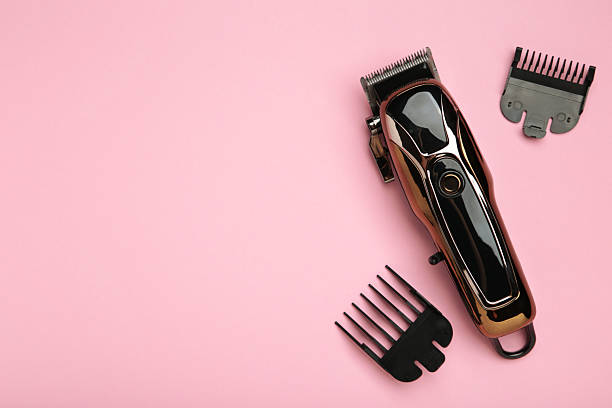
FAQ | Frequently Asked Questions about Hair Clippers for Sculpting Sideburn Lines
Q1: Can all hair clippers create clean sideburns?
No. The precision of the blade and its operational stability have a significant impact on the final result.
Q2: Do sideburns always have to be perfectly straight?
Not necessarily. A slight, natural curve often looks better in the long run.
Q3: How often should I trim my sideburns?
It is generally recommended to do a light trim every 7–14 days.
Q4: How can beginners reduce the error rate?
Prune from the outside in, in stages, and never do it all at once.
In conclusion, what truly determines the effect of hair clippers is attention to detail.
When it comes to sideburn grooming, hair clippers simply amplify your habits.
If done correctly, they can help you refine the details;
if done poorly, they can also magnify problems.
Once you truly master these techniques, you’ll discover that
good lines aren’t cut by luck, but rather through judgment, rhythm, and patience.


