
Whether you’re trying hair clippers for the first time or looking to save on salon fees by cutting your own hair at home, this article is for you. While home hair clippers are becoming increasingly popular, beginners can still easily run into some problems—such as uneven cuts, noticeable razor marks, or even ruining the hairstyle you wanted to try. Don’t worry, I’ve compiled 3 core operating principles, combined with practical experience and brand advice, to help you avoid these common mistakes and ensure a successful DIY haircut.
Table of Contents
Principle 1: Thorough Preparation—Clean tools, hair condition, and selection of the correct accessories
Choose the right comb and length
Many beginners are eager to cut their hair short as their first instinct, often resulting in “cutting it too short and being unable to go back.” Therefore, it’s recommended to start with a longer comb (#4 or #5) to confirm the desired length before gradually shortening it. Remember, there are no shortcuts; trying slowly is always safer.
Tip: If you want to try a gradient hairstyle, you can first cut the main length and then use a shorter comb to do some local processing. This way you won’t ruin the whole hairstyle in one go.
Keep hair clippers clean and blades sharp.
The condition of the blades directly affects the haircutting experience. Dull blades not only pull on the hair but can also injure the skin. Before each use, check that the blades are clean and lubricate them. This will not only ensure a smooth cut but also extend the life of your hair clippers.
Hair grooming and environment
Before cutting your hair, make sure it is clean, tangles are removed, and you have good lighting and a mirror ready. Dry or slightly damp hair is the easiest to observe in terms of length and direction.
Bright lights
- Use handheld mirrors and large mirrors together
- Prepare towels or a barber’s cape to prevent hair from sticking to your clothes.
- These details may be overlooked, but they are very important for beginners and can significantly reduce the chance of getting a bad haircut.

Principle Two: Stabilizing Techniques—Controlling Direction, Speed, and Pressure
Perform the procedure in the direction of hair growth.
Many beginners make the mistake of not considering the direction of hair growth, resulting in uneven cuts or obvious razor marks. Beginner advice:
- For large areas, cut in the direction of hair growth first to ensure even cuts.
- Perform small-scale reverse trimming to enhance the sense of layering.
Tip: If you’re unsure of the direction, first comb your hair with your fingers to observe the natural growth direction before moving the hair clippers.
Slow, steady, and gentle pressure
Rapidly sweeping and cutting can easily lead to uneven lengths and even scalp injuries. The ideal approach is to keep hair clippers steady, at a moderate speed, and gently glide them across the hair. Multiple light sweeps are safer than a single, forceful cut.
Smooth movement
- Control the pressure; do not press the blade too hard.
- You can stop after each scan to check the effect.
Auxiliary tools: Comb and comb conditioner combined
Using a comb to lift the hair before using a hair clipper ensures an even length and prevents it from being cut too short. This is a simple yet effective technique for DIY haircut beginners.
Principle 3: Segmented cutting and continuous inspection—preventing blind operation.
Segmented operation by region
Cutting the entire head in one go is prone to errors. It’s recommended to divide it into three sections:
- Rear and side
- top
- Edges and details
This allows for a clearer understanding of the progress and facilitates checking the balance.
Stop and observe periodically
After cutting one area, stop and observe it from multiple angles:
- Is it symmetrical?
- Is the hairstyle smooth?
- Did you miss the back of the head?
Beginners often overlook the small corners at the back of their heads, so observing them in a mirror is essential.
Repairing the edges and hairline
Finally, trim the hairline and edges with a shorter comb or trimmer. Don’t try to finish it all at once; take your time and fine-tune slowly. It’s safer than rushing.

The most common mistakes beginners make
Based on feedback from multiple hair clipper brands and users, common questions for beginners include:
- Cut it too short → There’s no going back
- Unclean/oiled hair clipper blades → pulling hair
- Too fast/too much force → Unevenness, obvious knife marks
- Ignoring lighting and mirrors → Difficulty in observing the back of the head
- Undivided cropping → prone to omissions or uneven lengths
Hair clipper practical tips and brand recommendations
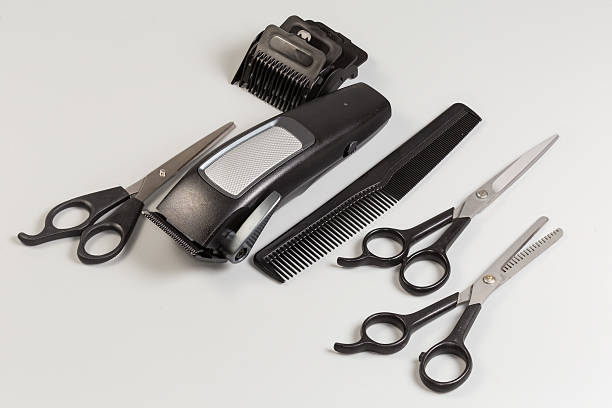
- Beginners can start with basic home hair clippers, which are low-noise, lightweight, and easy to use.
- Purchase a model with multiple brush settings to easily experiment with different lengths and gradient effects.
- The practice area can be equipped with a shawl or an old towel for easy cleaning of fallen hair.
- Take photos to record and compare different lengths and techniques to accumulate experience.
Personal experience: When I first tried fading, I used the #5 brush to cut the whole thing, then used the #3 brush to create a gradient on the sides, adjusting it gradually. This method was much safer than using a short brush directly.
FAQ—Frequently Asked Questions for Beginners
Q1: How long does it take for a beginner to become proficient with hair clippers?
A1: Practice for 10-15 minutes every day, and you will basically master the basic length control in a week. It may take 2-3 weeks to become proficient in gradient clipping.
Q2: Is it better to cut hair wet or dry?
A2: It is easiest to observe the length and direction of dry or slightly damp hair. Wet hair may cause errors in length.
Q3: How to choose a hairbrush?
A3: It is recommended to start with longer hairbrushes and gradually shorten them. Beginners can start with #4 or #5. Hairbrushes that are too short are easy to ruin your hairstyle.
Q4: What should I do if the blade gets hot?
A4: Take a break after about 10 minutes of use, or apply a small amount of special lubricant to avoid burning your scalp.
Q5: Can I create complex hairstyles by DIY haircutting?
A5: Beginners are advised to start with simple hairstyles. Details like gradients or short hair require practice and experience. You can use online tutorial videos to assist your learning.
Summarize
Master the three key operating principles of hair clippers:
- Thorough preparation—tools, length, environment
- Stable technique—smooth hair movement, slow sweeping, light pressure.
- Segmented inspection—progressing step by step and continuously confirming
With patient practice, you too can easily master DIY haircuts at home. Beginners shouldn’t strive for perfection; focus on safety and evenness first, and then try more complex hairstyles once you’ve gained experience.
Finally, a reminder: choosing a reliable hair clipper brand and a suitable hair comb will allow you to cut your hair at home with the same confidence as a professional hairstylist.


