
Getting a haircut doesn’t always require a trip to the barbershop. Especially in our busy lives, cutting your own hair can save both time and money. If you’re considering buying hair clippers for self-cutting, this article will provide you with some practical steps and tips to help you achieve your ideal hairstyle with hair clippers . With a little practice, you’ll easily master these techniques and achieve professional-level results!
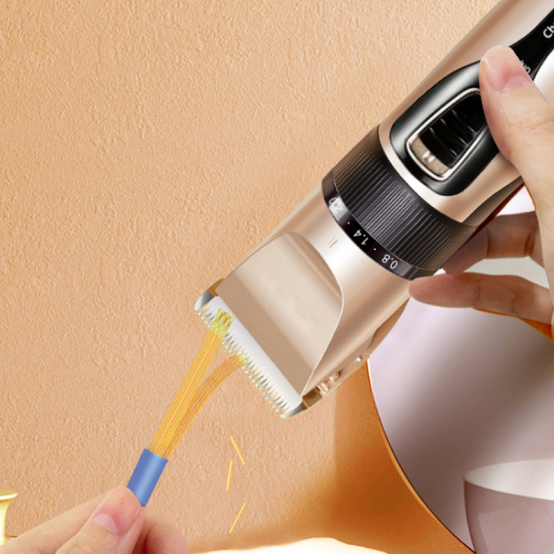
1. Prepare tools:
To get a successful haircut, you first need the right tools. Here are the basic equipment you’ll need:
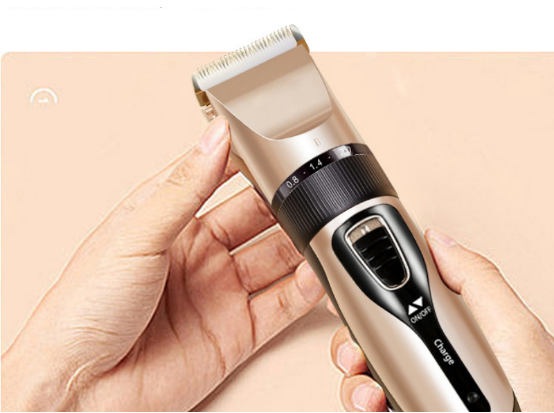
Hair clippers: Choose hair clippers with a variety of caliper lengths . The most common caliper lengths are 10mm, 13mm, 16mm, 7mm, and 3mm. Make sure the hair clippers have enough adjustment options so you can adjust the length to suit different areas of hair.
Comb: used to comb hair, keep it neat and avoid clutter during haircut.
Cleaning tools: A lot of hair may be generated during the haircut process, so prepare cleaning tools (such as hair brushes, brooms, and vacuum cleaners) to help keep the environment clean.
Exercise hand flexibility: Especially if you are one-handed, you can improve the flexibility of your other hand through some simple hand exercises. For example, simulate writing in the air or doing uppercuts to help you operate better.
2. Partitioning:
The key to haircutting is zoning. Zoning ensures that each part can be trimmed evenly and precisely. First, we can divide the hair into the following areas:
Area A: top of the head
Area B: left and right sides of the top of the head and two large sides
Area C: back of the head
When partitioning, pay special attention to edge processing, especially the transition part between the top of the head and the back of the head, which can make the overall hairstyle more three-dimensional and natural.
3. Operation steps:
Here are the specific steps to cut your hair. Follow these steps to ensure that your haircut is even and natural:
Step 1: Treat Area B (both sides of the top edge and the two sides of the head)
Using a 10mm caliper
, gently push the hair clippers toward your scalp, ensuring they maintain close contact with the skin and reach the appropriate area. Be careful not to over-clipper, maintaining a clean, smooth line at the bottom. Be careful not to apply excessive pressure, as this can cause excessive height and create unwanted hard lines.
Switch to a 13mm caliper
and continue along the top of the area you just trimmed, ensuring a natural, smooth transition. Keep the clippers parallel to the scalp to avoid creating a sharp dividing line. At this point, you can slightly transition the caliper length to the longer area to ensure a more harmonious transition.
Switch to a 16mm caliper
and use it a few inches above the head. Continue trimming using a C-shaped technique (turning the clippers slightly outward). Keeping the clippers vertical or slightly turned outward will prevent harsh lines and ensure a more natural transition. Be gentle as you trim to avoid scratching your scalp.
7mm
caliper and trim a few centimeters below the 10mm area to further smooth the transition. The focus is on adjusting the transition area between the top and bottom to make it look smoother and avoid an unnatural sense of discontinuity.
Detailed trimming:
Check the sides. If there are any long hair or uneven areas, use a longer caliper to trim them appropriately to ensure the length of each area is properly connected. Be especially careful not to trim the hair on the top of the head to avoid affecting the overall style. Ensure the edges on both sides are neat and clean for a more symmetrical and balanced look.
Step 2: Treat Area C (the back of the head)
Use the same principles and steps to work on the back of the head, ensuring a smooth transition and avoiding unnatural hard lines.
Step 3: Fine-tuning and correction
If you notice a noticeable transition between different areas (e.g., the line between a 16mm and 13mm caliper is too distinct), try fine-tuning your hair clippers . Many products on the market now offer fine-tuning, which can effectively address the issue of an unnatural “fade” effect by making subtle adjustments to the length.
4. Tips for hair cutting:
Don’t rush: During the haircut, be patient and careful, and don’t rush. It’s best to choose a quiet environment and avoid interruptions so you can focus on every detail.
Start with a longer length: If you’re not sure about your skill level, you can start with a longer caliper and then gradually transition to a shorter length. This will prevent you from cutting too short, and if you do, you can always trim it with a little adjustment or go to a hairdresser.
Check the result: After completing one side, it’s best to check in a mirror to ensure both sides are symmetrical and the length is consistent. Make minor adjustments if necessary.
Maintaining hair clippers: After using hair clippers , remember to clean the device to keep the blades sharp and extend their service life.
5. Conclusion
Cutting your own hair can be challenging, but if you put your heart into it and have the right tools and techniques, the results are sure to be satisfying. With practice, you’ll find yourself becoming more and more adept at using hair clippers and achieving the hairstyle you desire.
Hair clippers not only save you money on haircuts, but also bring you more convenience and freedom. So, don’t hesitate any longer, choose a suitable hair clipper , and start creating your ideal hairstyle yourself today!
Hair clippers suitable for DIY hairstyles at home :
Waterproof Multi-Function Haircutting Set – Men’s Hair Clipper, Trimmer and Nose Hair Trimmer