
Hey there, haircutting enthusiasts! Have you ever wondered why your hair clippers and trimmers cut so smoothly? How do they maintain such high speeds, tackling all hair types like a hot knife through butter? Today, we’ll explore the science behind these cutting tools and discover what gives them such incredible power and speed.
Hair Clippers vs. Trimmers: What’s the Difference?
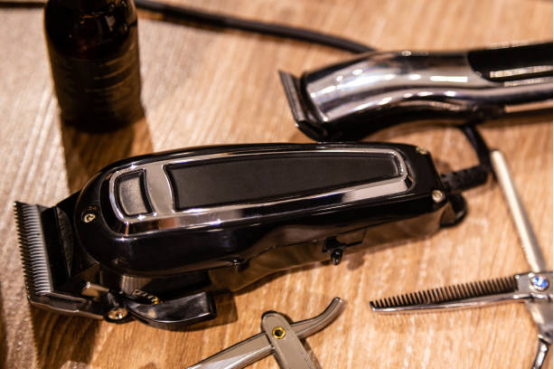
Before we get into the details, a quick note: while hair clippers and trimmers may look similar, they have different purposes. Hair clippers are typically used to trim larger areas of hair, such as adjusting the length of a hairstyle, while trimmers focus on finer details like sideburns, hairlines, and beard lines. Each has its own distinct role, and choosing the right tool can help you achieve the perfect look.
Motor: The core that drives everything
When it comes to hair clippers, the first thing to mention is the motor—it’s the driving force behind all the action. Different types of motors determine the speed and power of hair clippers. There are generally three types of motors on the market: rotary motors, magnetic motors, and pivot motors.
- Rotary motors: If you need serious power, rotary motors are the best choice. They offer higher power and can easily handle thick or coarse hair. These motors are commonly found in high-end hair clippers and are capable of quickly cutting through a wide range of hair types.
- Magnetic motors: These rely on a combination of magnetism and coils to generate power. While not as powerful as rotary motors, they are precise, quiet, and lightweight, making them ideal for trimmers, especially for detailed work. Tools with magnetic motors are ideal for hairdressers who appreciate precision.
- Pivot motors: These motors combine electromagnetic energy with the principle of leverage. They are very durable and suitable for all hair types, especially coarse and thick hair. They are often used in professional-grade hair clippers and are particularly suitable for cutting large areas.
Blade: a sharp tool for pruning
Next, let’s talk about the blades. The material of the blades directly affects the trimming effect of hair clippers and trimmers.
- Stainless steel blades: These blades are very durable and stay sharp for a long time. They are suitable for daily use and can handle both fine and coarse hair.
- Ceramic blades: The biggest advantage of ceramic blades is their excellent heat resistance, which allows them to stay sharp for a long time and reduce the heat generated by friction, avoiding overheating and discomfort. Ceramic blades are often found in professional-grade hair cutting tools and are particularly suitable for hair clippers that require efficient trimming.
Blade length is also crucial. Longer blades are good for trimming large areas, allowing you to trim more hair at once, while shorter blades are good for detailed trimming, such as trimming sideburns and hairlines.
Speed and Power: The Secret to Fast Trimming
The speed and power of hair clippers directly impact the smoothness of your trim. The higher the power, the faster the motor spins, and the more efficiently the blades cut. This is especially important for those who need to trim quickly or make adjustments to large areas.
For trimmers, although the power is usually not that high, precision is particularly important. Most trimmers provide an adjustable speed function. Novices can choose low speed for detailed trimming, while experienced barbers can choose high speed mode to improve work efficiency.
Maintenance: Maintenance makes tools last longer
Good tools require good care, and hair clippers and trimmers are no exception. Regularly cleaning the blades and oiling the motor will maintain the tool’s performance and extend its lifespan. With regular maintenance, your hair clippers will continue to operate efficiently, avoiding wear and clogging that can affect their effectiveness.
Conclusion: Choose the right hair clippers and trimmers to get the perfect haircut
In summary, choosing the right hair clippers and trimmers is crucial to a successful haircut. Factors like the motor, blade material, blade length, power, speed, and maintenance all play a role in determining your final haircut. Choosing the right tools not only ensures a smooth cut but also a flawless hairstyle.
Whether you are a professional barber or a home trimmer, choosing the right hair cutting tools is the key to improving hair cutting efficiency and quality. Investing in high-quality hair clippers and trimmers can help you get more results with less effort, whether you are trimming at home or serving customers.